 Image 1 of 1
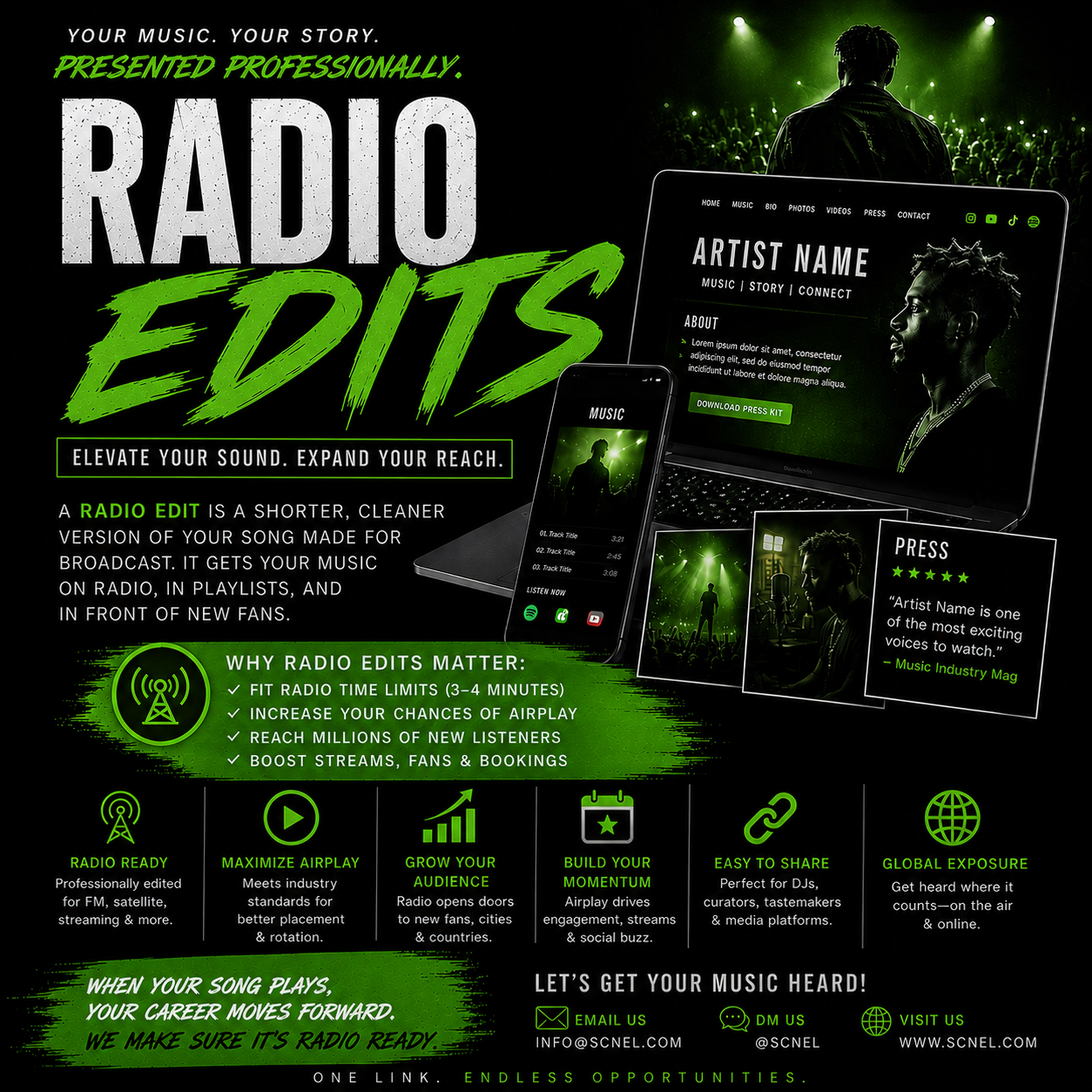
Radio edits are specially modified versions of songs created to meet broadcasting standards for radio stations, television networks, streaming platforms, and public media outlets. These edits are designed to remove or replace explicit language, offensive content, excessive profanity, sexual references, violence, or other material that may violate broadcasting regulations or audience guidelines. Radio edits help make music suitable for mainstream audiences while increasing the chances of receiving radio airplay, public exposure, and commercial opportunities.
A radio edit typically consists of:
Removal or replacement of explicit lyrics
Clean versions of profanity and offensive language
Shortened song length for radio formatting
Adjusted intros and endings for smoother transitions
Volume balancing and mastering adjustments
Instrumental edits or muted sections
Rearranged verses or hooks for timing purposes
Broadcast-ready audio formatting
Proper metadata tagging and labeling
Clean and explicit version organization
Most commercial radio stations prefer songs that are approximately 2 to 4 minutes long, making radio edits important for maintaining listener engagement and fitting programming schedules. In many cases, radio edits are also required for television placements, advertisements, public performances, school events, sports arenas, and streaming playlists with content restrictions.
Radio edits are important because they:
Increase opportunities for radio airplay
Make music accessible to wider audiences
Improve chances for television and commercial placements
Help artists maintain a professional image
Expand promotional and marketing opportunities
Meet FCC and broadcasting guidelines
Allow music to be played in public venues and family-friendly environments
Improve chances of playlist placements and industry exposure
Having both clean and explicit versions of music is considered professional within the music industry because it allows artists to market their music to different audiences and platforms while maximizing exposure and monetization opportunities.
Radio edits are specially modified versions of songs created to meet broadcasting standards for radio stations, television networks, streaming platforms, and public media outlets. These edits are designed to remove or replace explicit language, offensive content, excessive profanity, sexual references, violence, or other material that may violate broadcasting regulations or audience guidelines. Radio edits help make music suitable for mainstream audiences while increasing the chances of receiving radio airplay, public exposure, and commercial opportunities.
A radio edit typically consists of:
Removal or replacement of explicit lyrics
Clean versions of profanity and offensive language
Shortened song length for radio formatting
Adjusted intros and endings for smoother transitions
Volume balancing and mastering adjustments
Instrumental edits or muted sections
Rearranged verses or hooks for timing purposes
Broadcast-ready audio formatting
Proper metadata tagging and labeling
Clean and explicit version organization
Most commercial radio stations prefer songs that are approximately 2 to 4 minutes long, making radio edits important for maintaining listener engagement and fitting programming schedules. In many cases, radio edits are also required for television placements, advertisements, public performances, school events, sports arenas, and streaming playlists with content restrictions.
Radio edits are important because they:
Increase opportunities for radio airplay
Make music accessible to wider audiences
Improve chances for television and commercial placements
Help artists maintain a professional image
Expand promotional and marketing opportunities
Meet FCC and broadcasting guidelines
Allow music to be played in public venues and family-friendly environments
Improve chances of playlist placements and industry exposure
Having both clean and explicit versions of music is considered professional within the music industry because it allows artists to market their music to different audiences and platforms while maximizing exposure and monetization opportunities.