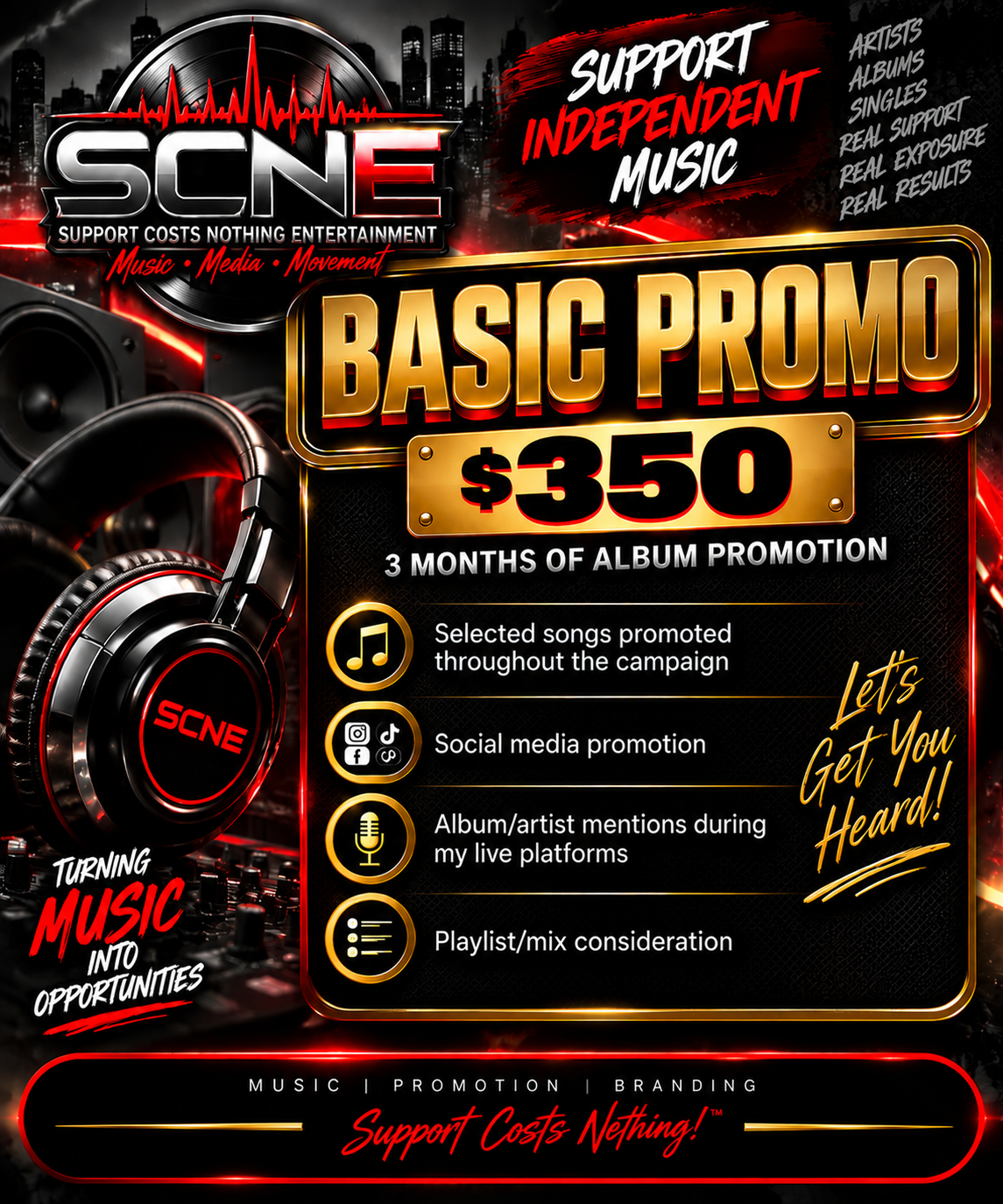
BASIC PROMO | $350
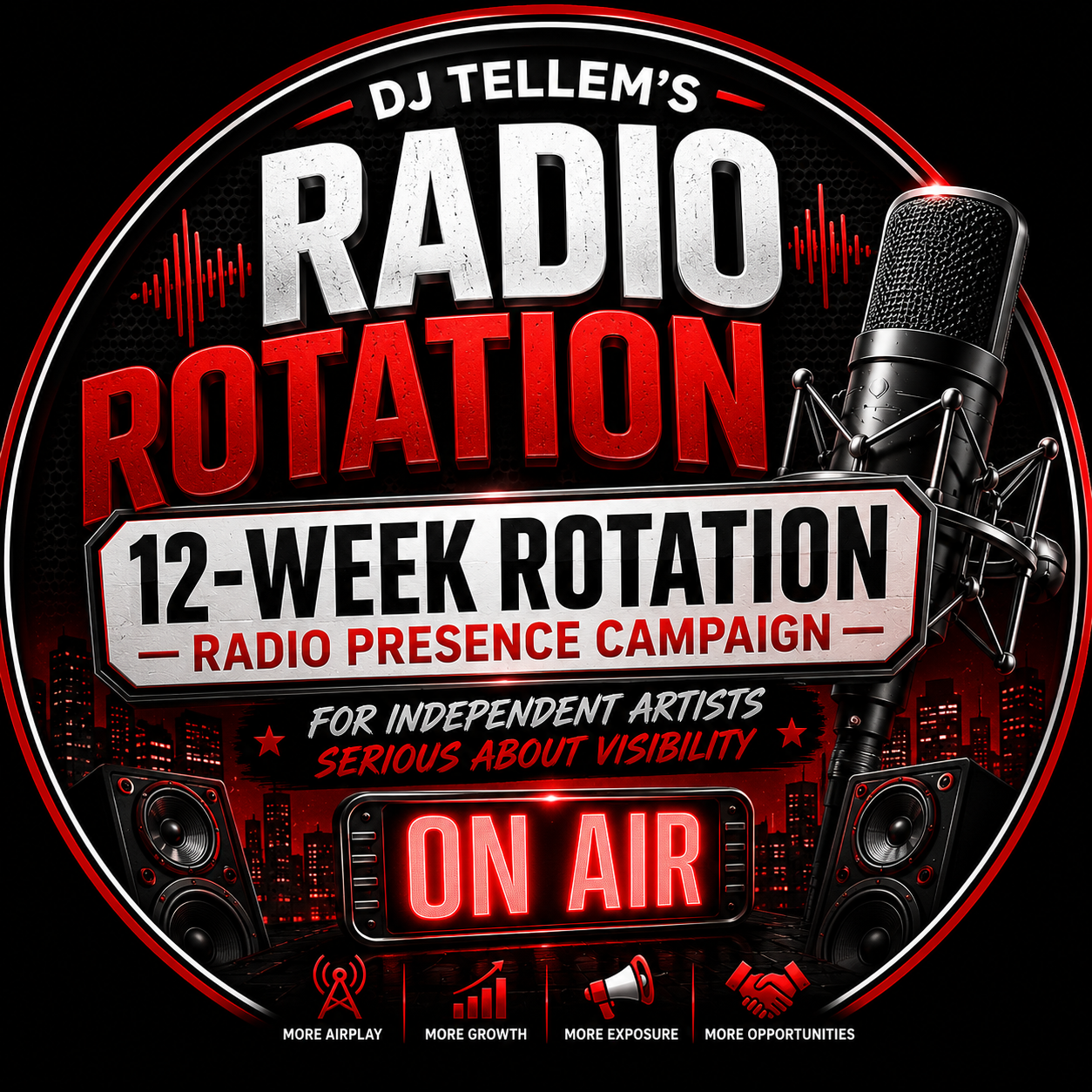
• 3 months of album promotion
• Selected songs promoted throughout the campaign
• Social media promotion
• Album/artist mentions during my live platforms
• Playlist/mix consideration
• Promotional support throughout the 90 days
This is mainly for keeping consistent awareness around the album without doing a full radio campaign.
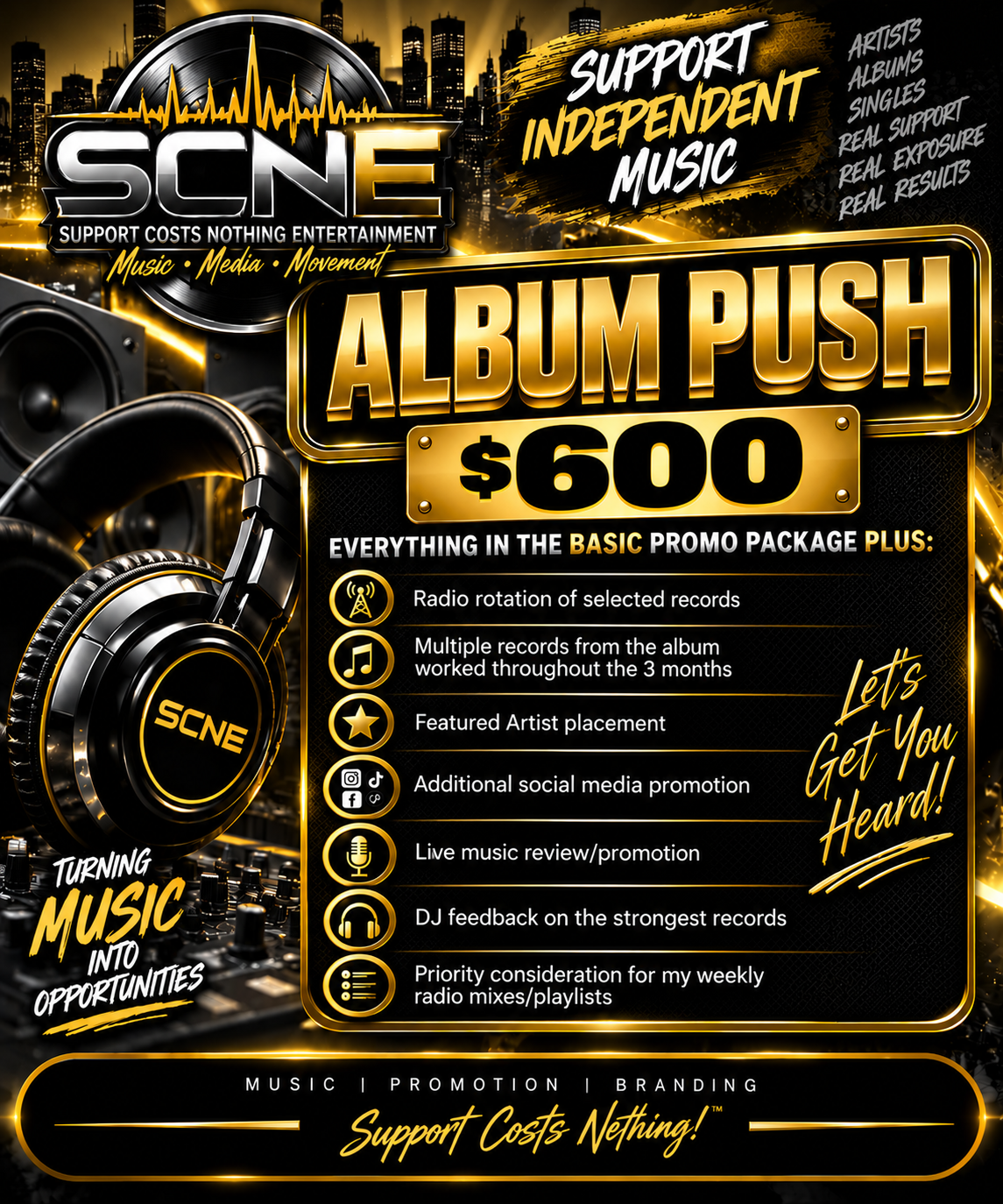
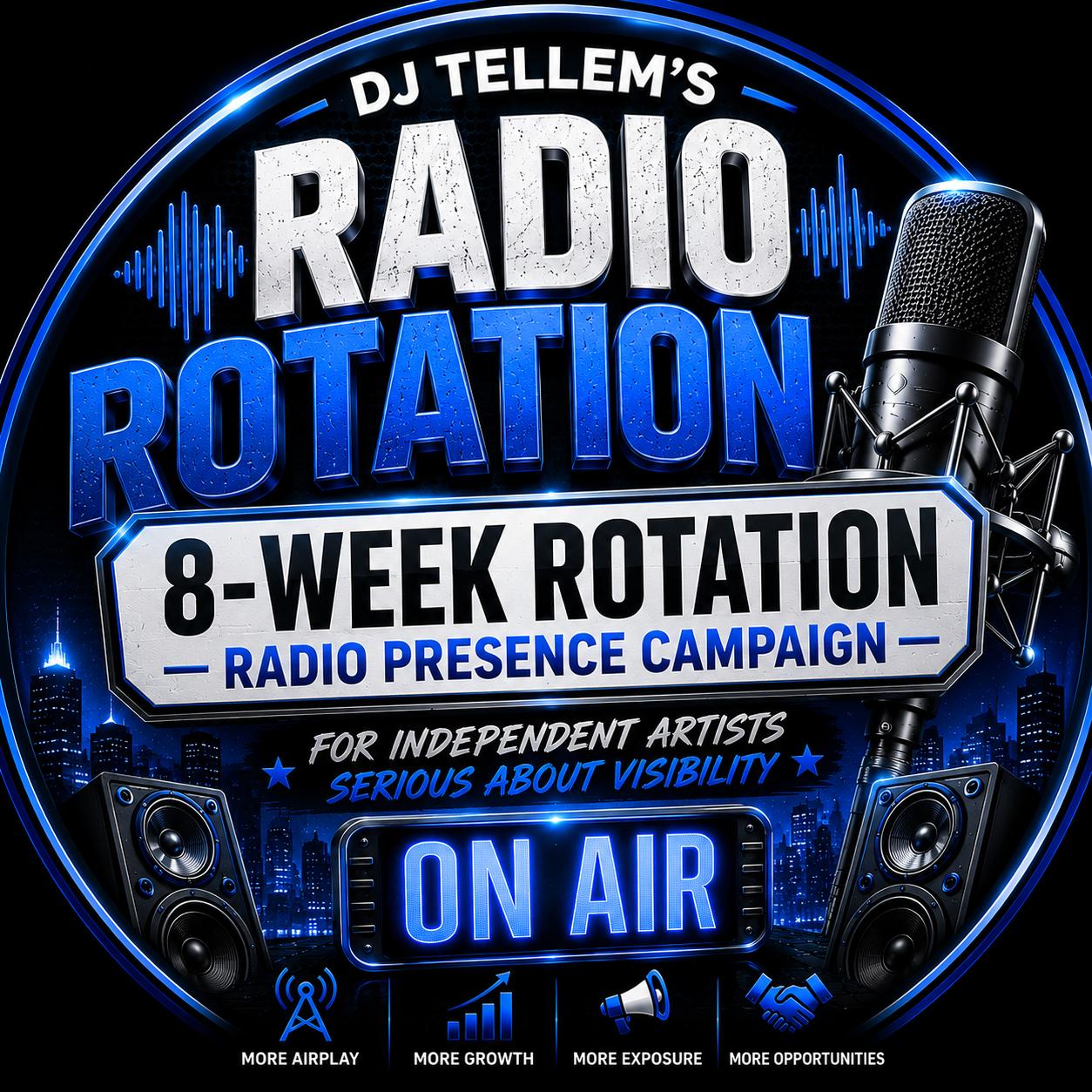
ALBUM PUSH | $600
Everything in the Basic Promo package PLUS:
• Radio rotation of selected records
• Multiple records from the album worked throughout the 3 months
• Featured Artist placement
.• Additional social media promotion
• Live music review/promotion
• DJ feedback on the strongest records
• Priority consideration for my weekly radio mixes/playlists
This gives the album a stronger promotional and radio presence over the full 90 days.
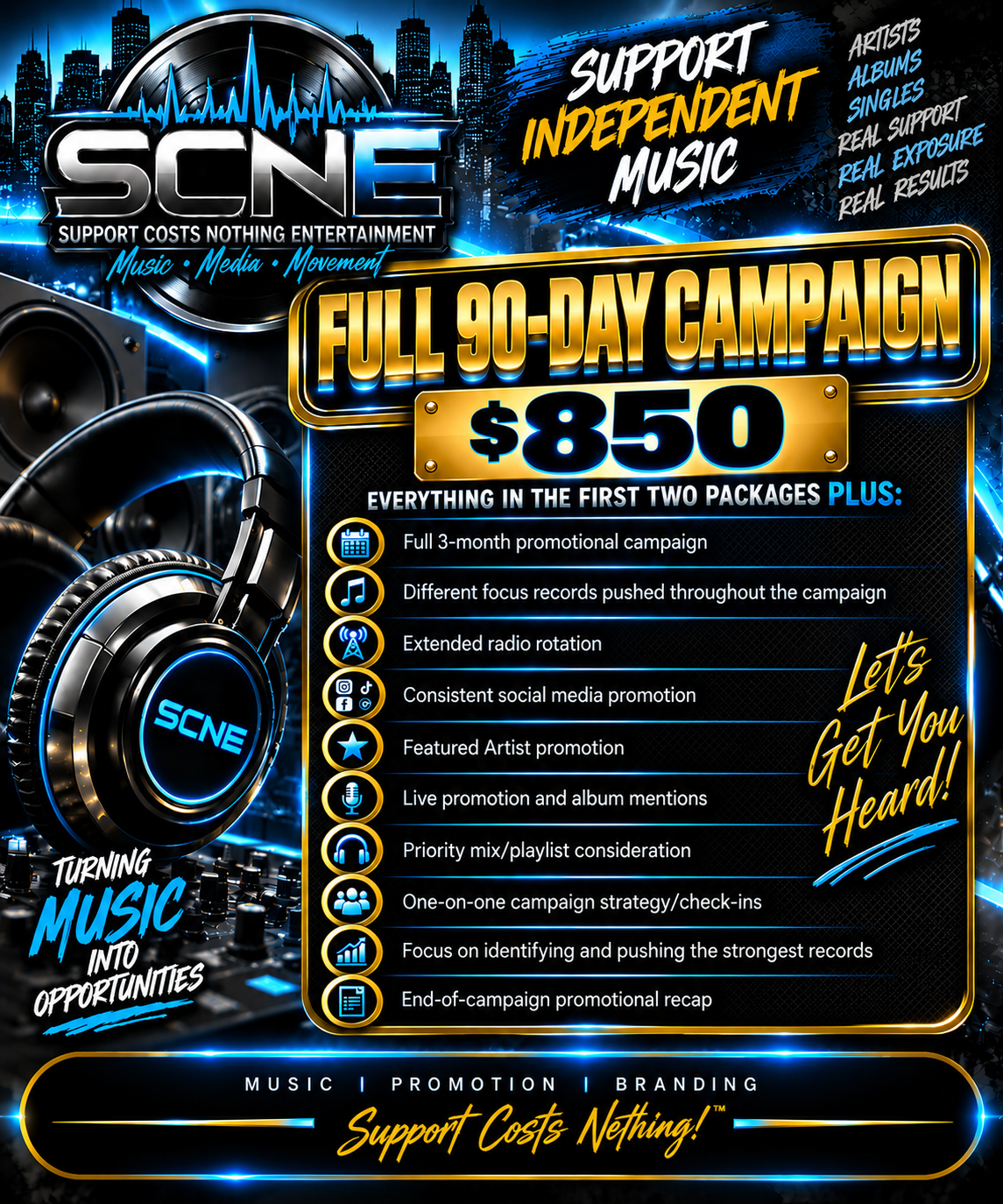
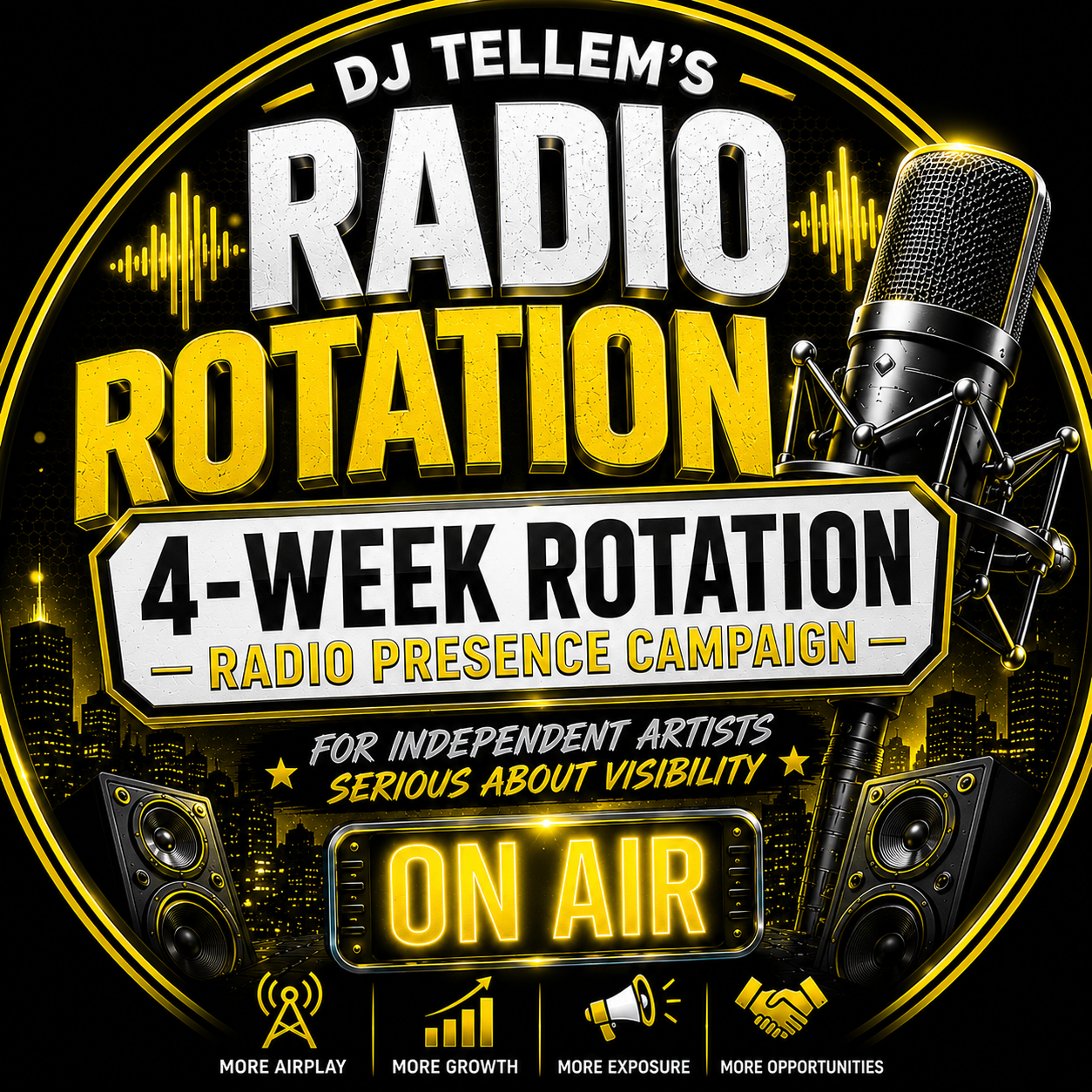
FULL 90-DAY CAMPAIGN | $850
Everything in the Basic & Album packages PLUS:
• Full 3-month promotional campaign
• Different focus records pushed throughout the campaign
• Extended radio rotation
• Consistent social media promotion
• Featured Artist promotion
• Live promotion and album mentions
• Priority mix/playlist consideration
• One-on-one campaign strategy/check-ins
• Focus on identifying and pushing the strongest records
• End-of-campaign promotional recap
This is the complete package for someone wanting to actually work the album as a 90-day campaign instead of simply promoting it here and there.
*Payment for the Full Campaign: $850 paid in full OR $300/month for 3 months ($900 total)
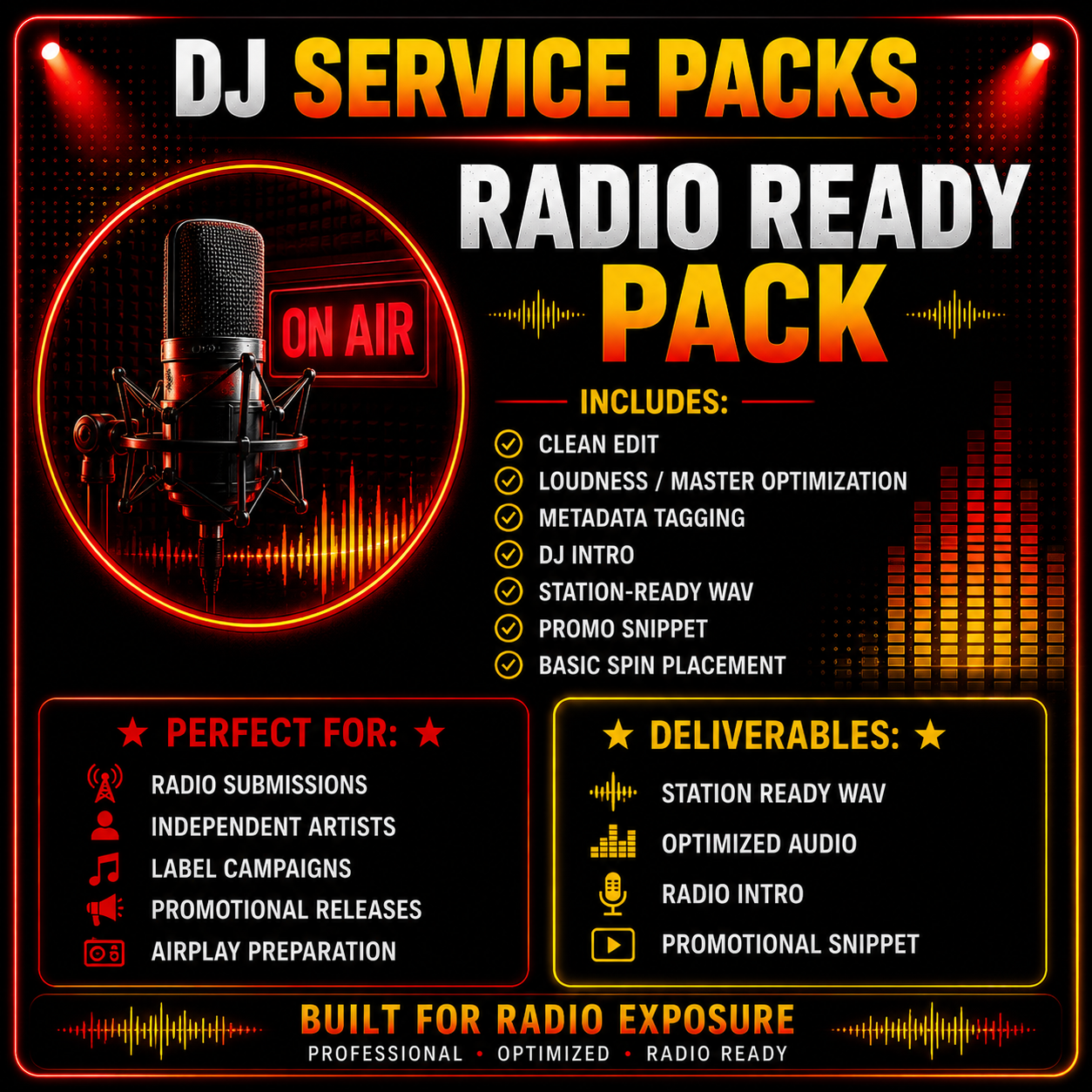
✔ Clean Edit
✔ Loudness / Master Optimization
✔ Metadata Tagging
✔ DJ Intro
✔ Station-Ready WAV
✔ Promo Snippet
✔ Basic Spin Placement
Radio submissions
Independent artists
Label campaigns
Promotional releases
Airplay preparation
Station Ready WAV
Optimized Audio
Radio Intro
Promotional Snippet
Built For Radio Exposure
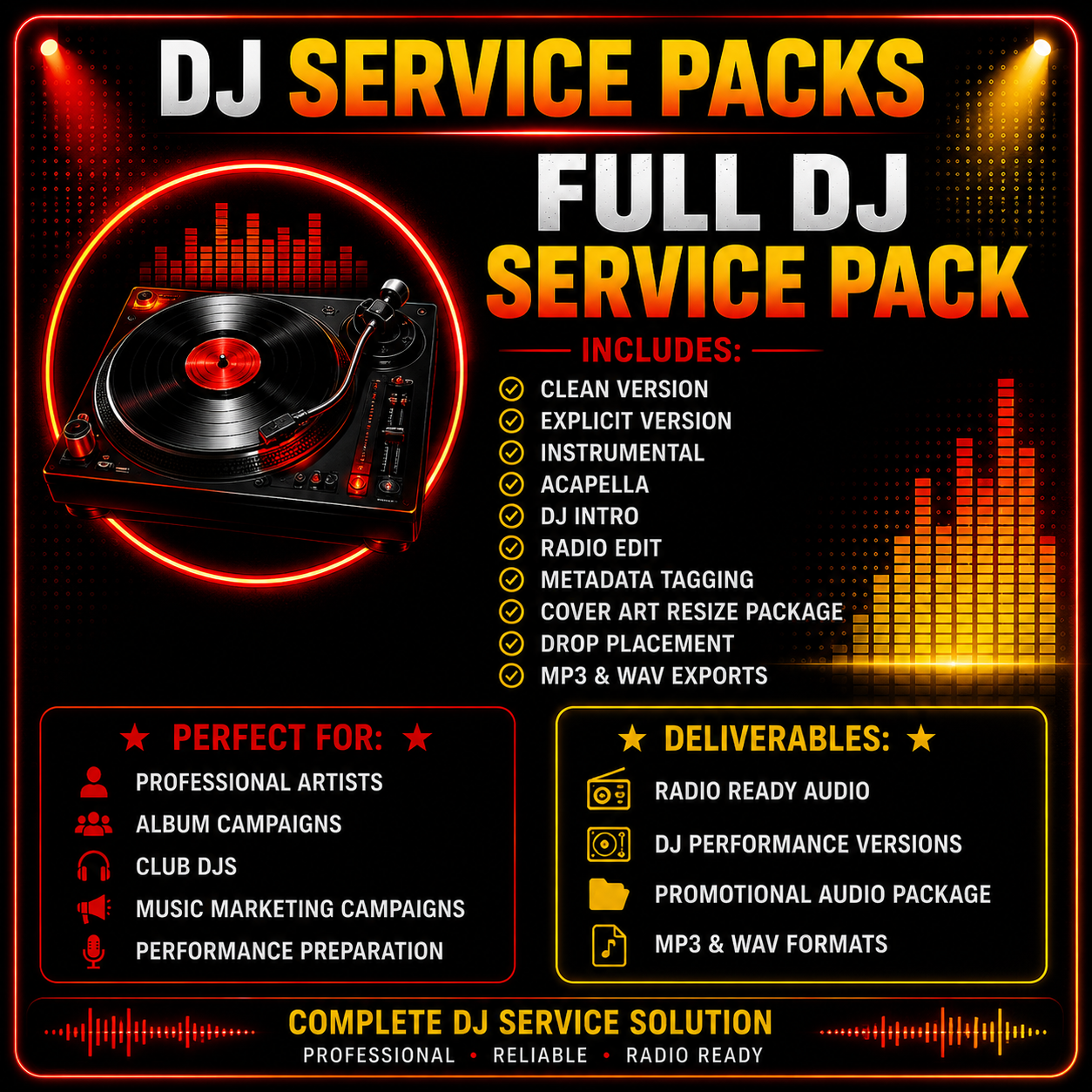
✔ Clean Version
✔ Explicit Version
✔ Instrumental
✔ Acapella
✔ DJ Intro
✔ Radio Edit
✔ Metadata Tagging
✔ Cover Art Resize Package
✔ Drop Placement
✔ MP3 & WAV Exports
Professional artists
Album campaigns
Club DJs
Music marketing campaigns
Performance preparation
Radio Ready Audio
DJ Performance Versions
Promotional Audio Package
MP3 & WAV Formats
Complete DJ Service Solution
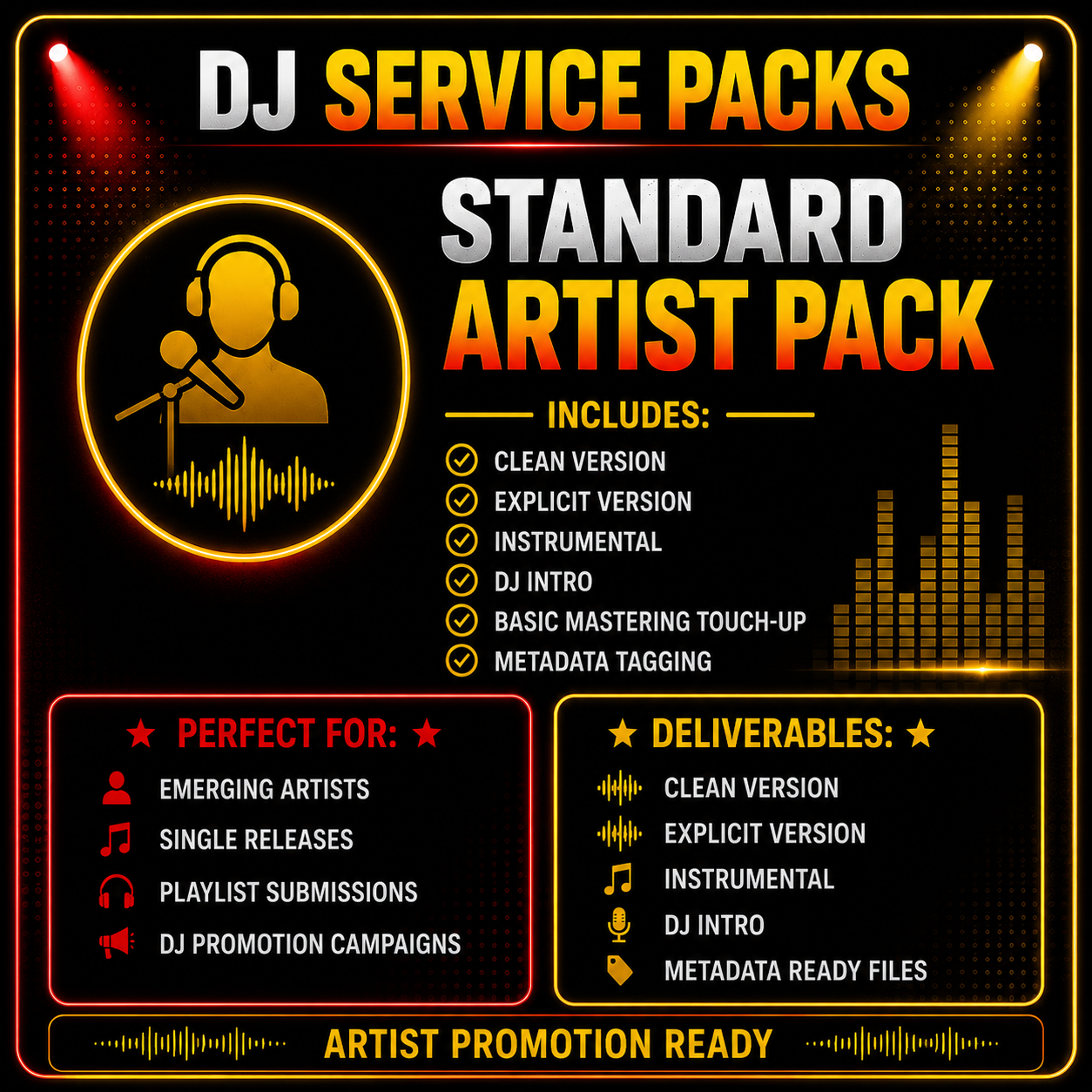
✔ Clean Version
✔ Explicit Version
✔ Instrumental
✔ DJ Intro
✔ Basic Mastering Touch-Up
✔ Metadata Tagging
Emerging artists
Single releases
Playlist submissions
DJ promotion campaigns
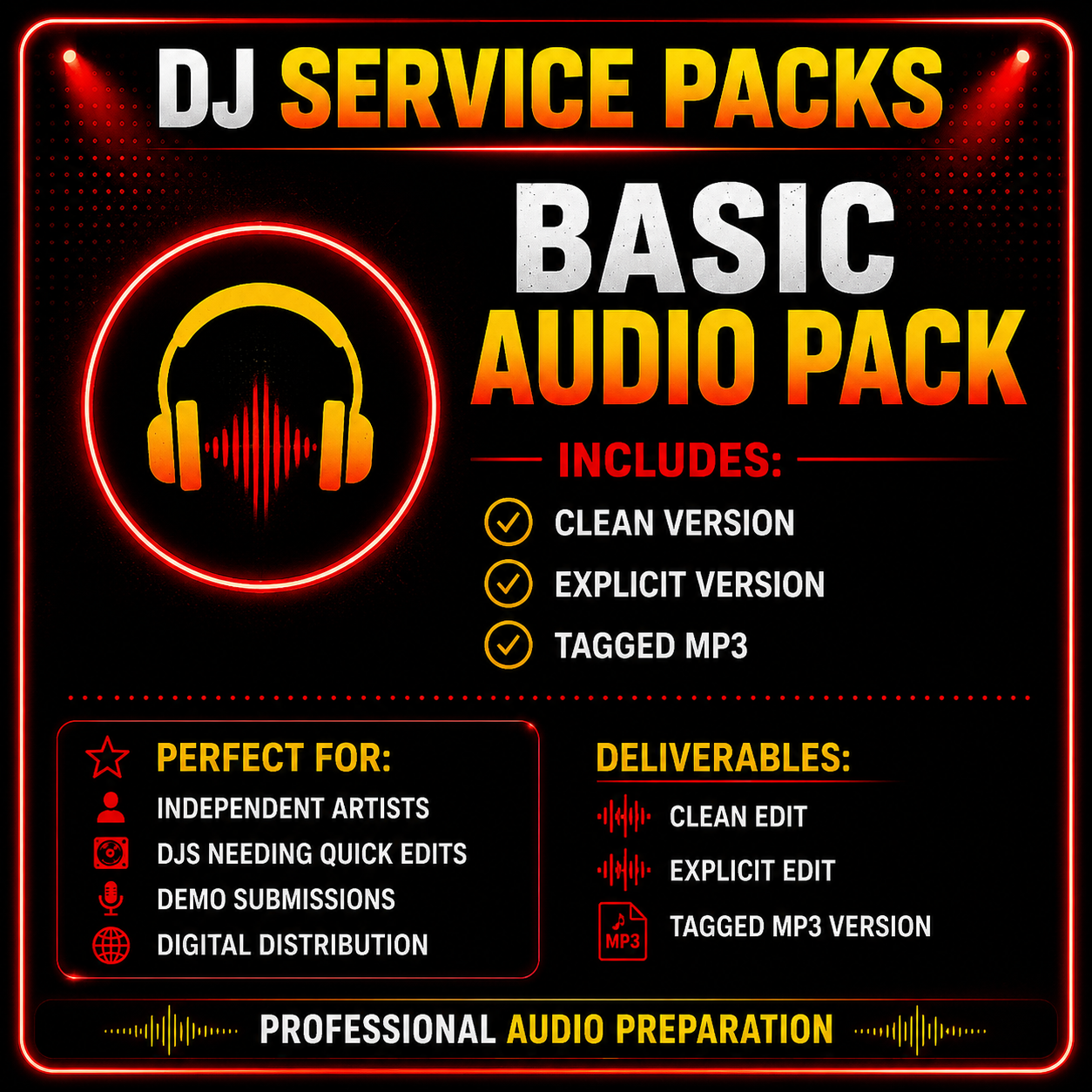
Clean Version
Explicit Version
Instrumental
DJ Intro
Metadata Ready Files
Artist Promotion Ready
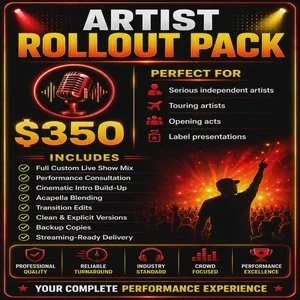
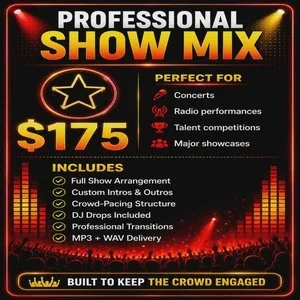
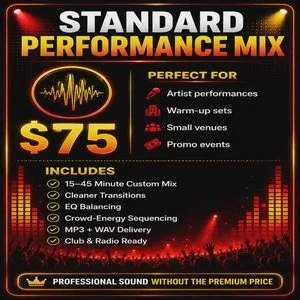
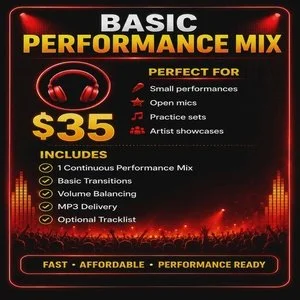
Full custom live show mix
Performance arrangement consultation
Intro build-up cinematic opening
Transition edits
Acapella blending
Crowd pause/spoken-word moments
Clean version
Explicit version
Backup copies
Streaming-ready delivery
Serious independent artists
Touring artists
Opening acts
Label presentations
Everything in Silver Package
360 Photo Booth Experience
Extended DJ Service (Up to 6 Hours)
Promotions on Virtual Radio
Premium Lighting & Club Effects
Professional Setup & Teardown
Music Tailored To Your Event
Direct Consultation
Travel Outside 50 Miles May Require Additional Fee
Deposit & Contract Required To Secure Booking
Professional DJ System
Wireless Microphones
Two Premium Speakers
Dance Floor Lighting
Up to 4 Hours of DJ Service
Music Planning Consultation
Professional Setup & Teardown
Music Tailored To Your Event
Direct Consultation
Travel Outside 50 Miles May Require Additional Fee
Deposit & Contract Required To Secure Booking
✔ Everything in Bronze Package
✔ Enhanced Dance Floor Lighting
✔ Fog Machine Effects
✔ Basic MC Services (Announcements)
Professional Setup & Teardown
Music Tailored To Your Event
Direct Consultation
Travel Outside 50 Miles May Require Additional Fee
Deposit & Contract Required To Secure Booking
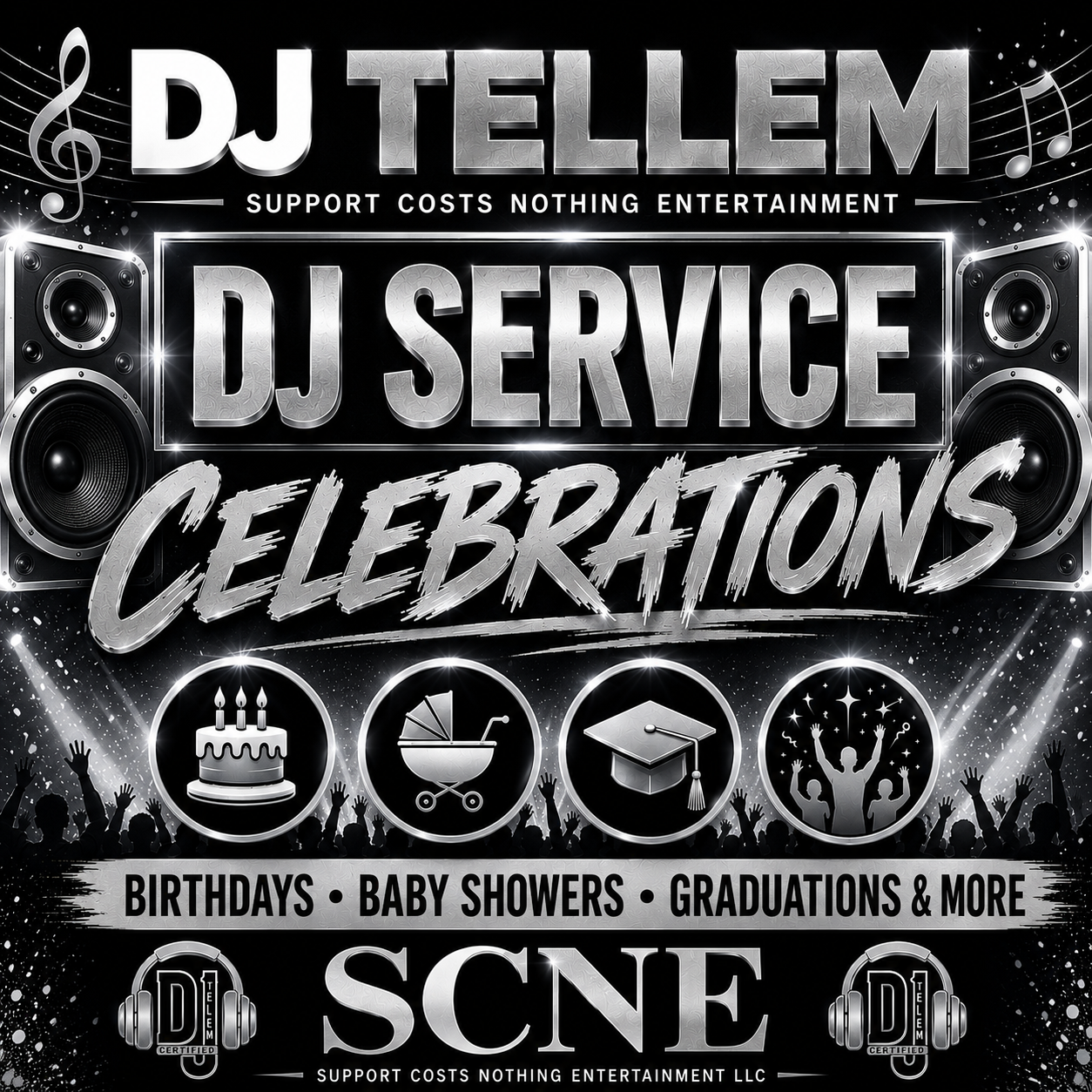
✔ Everything in Bronze Package
✔ Enhanced Dance Floor Lighting
✔ Fog Machine
✔ Basic MC Services
Professional Setup & Teardown
Music Tailored To Your Event
Direct Consultation With DJ Tell’em
Deposit & Contract Required To Secure Booking Fee
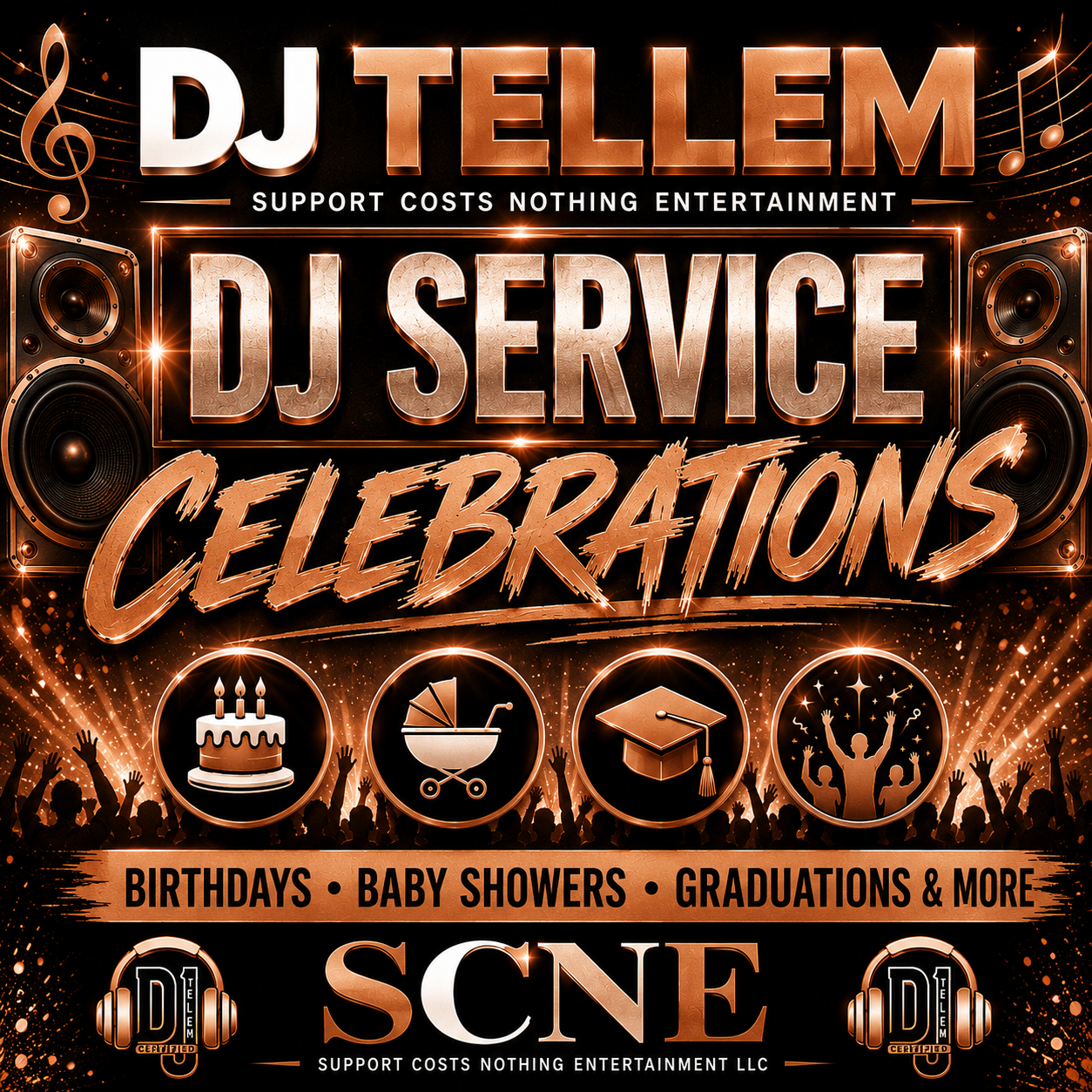
✔ Professional DJ System
✔ Wireless Microphones
✔ Two Premium Speakers
✔ Dance Floor Lighting
✔ Up to 4 Hours of DJ Service
Professional Setup & Teardown
Music Tailored To Your Event
Direct Consultation With DJ Tell’em
Deposit & Contract Required To Secure Booking Fee
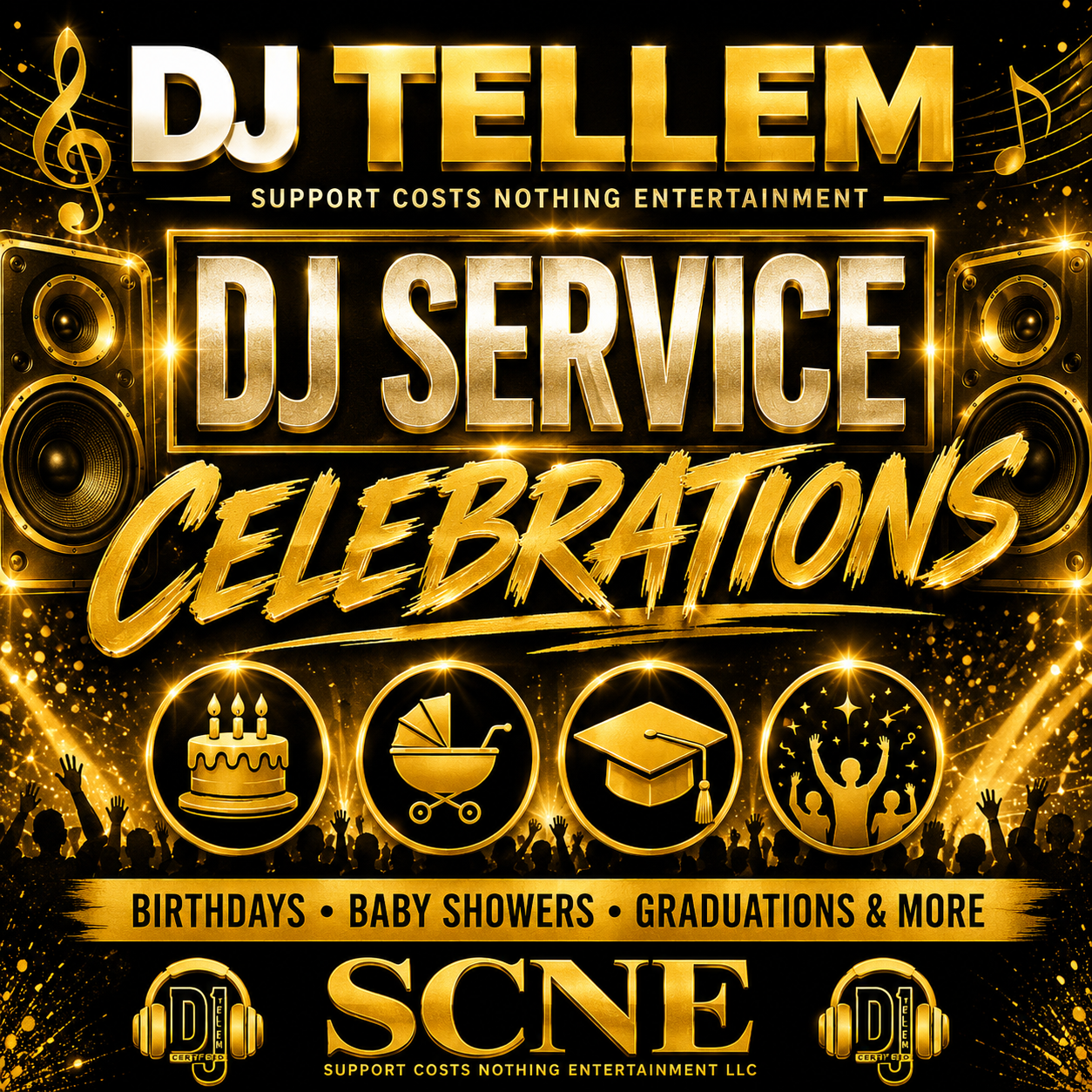
Everything in Silver Package
360 Photo Booth Experience
Extended DJ Packages
Promotions on Party Slides
Premium Lighting & Club Effects
Professional Setup & Teardown
Music Tailored To Your Event
Direct Consultation With DJ Tell’em
Deposit & Contract Required To Secure Booking Fee
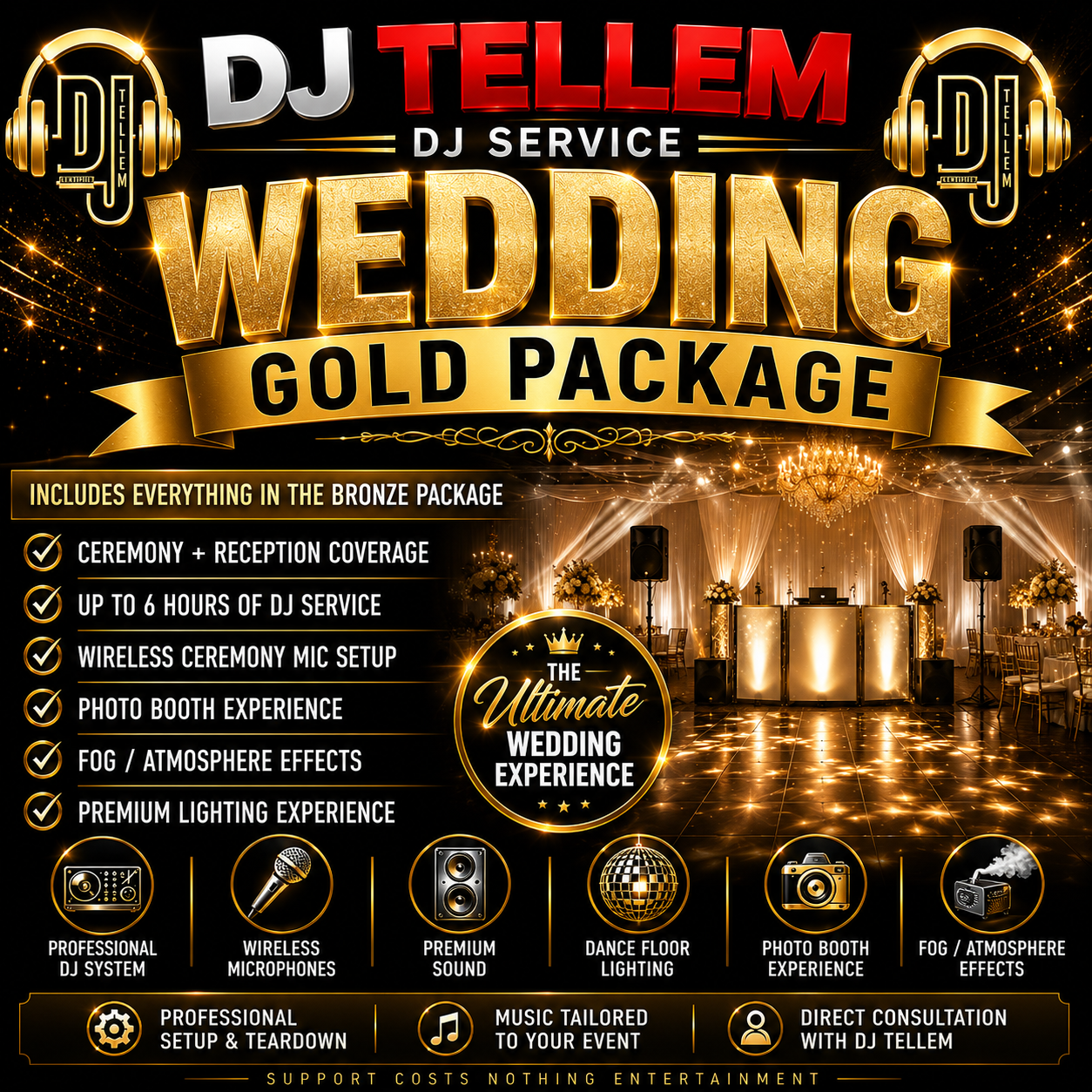
Full premium wedding experience.
Everything in Silver
Ceremony + Reception Coverage
Up to 6 Hours of DJ Service
Wireless Ceremony Mic Setup
Photo Booth Experience
Fog / Atmosphere Effects
Premium Lighting Experience
Professional Setup & Teardown
Music Tailored To Your Event
Direct Consultation With DJ Tell’em
Travel Outside 50 Miles May Require Additional Fee
Deposit & Contract Required To Secure Booking
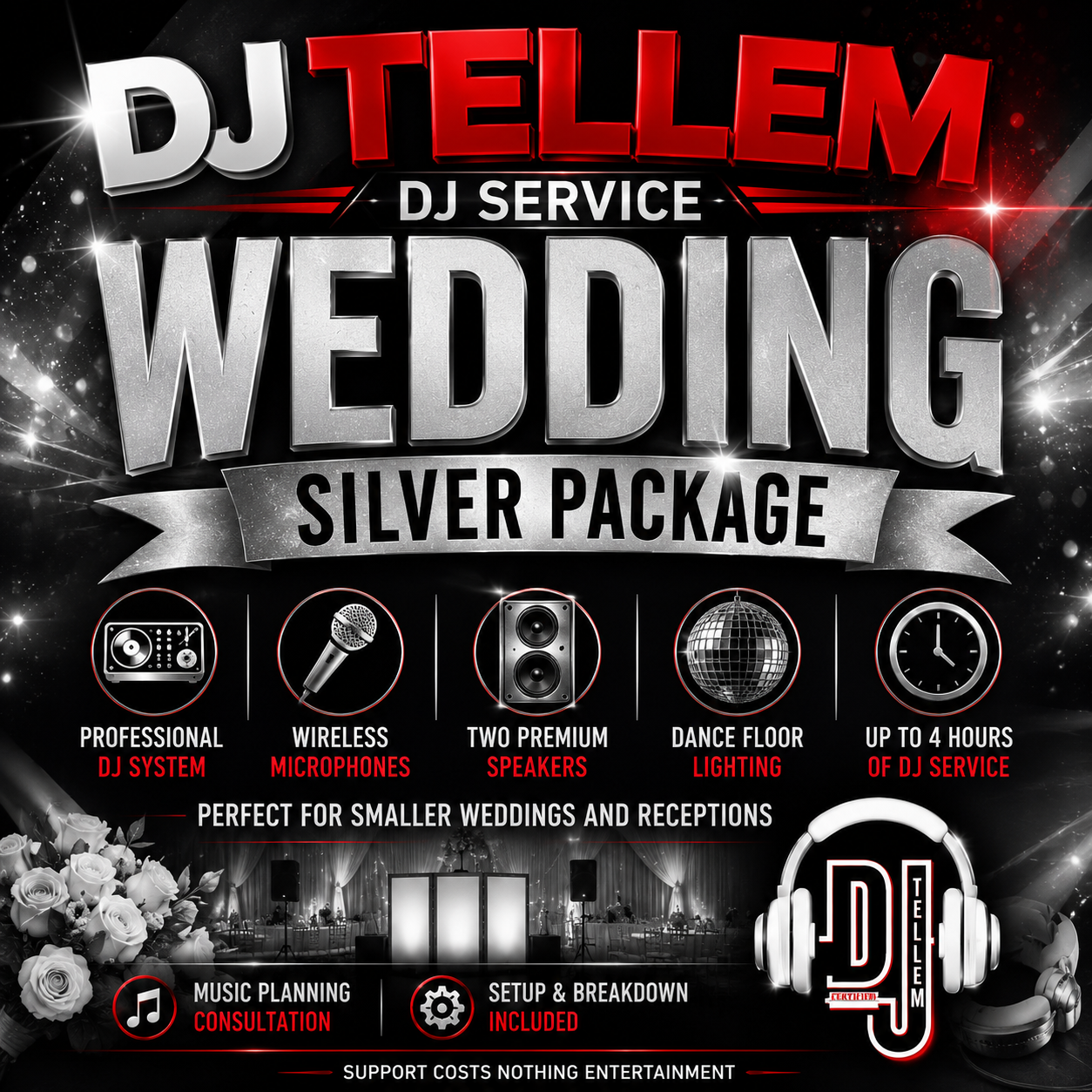
Perfect for smaller weddings and receptions.
✔ Professional DJ System
✔ Wireless Microphones
✔ Two Premium Speakers
✔ Dance Floor Lighting
✔ Up to 4 Hours of DJ Service
Professional Setup & Teardown
Music Tailored To Your Event
Direct Consultation With DJ Tell’em
Travel Outside 50 Miles May Require Additional Fee
Deposit & Contract Required To Secure Booking
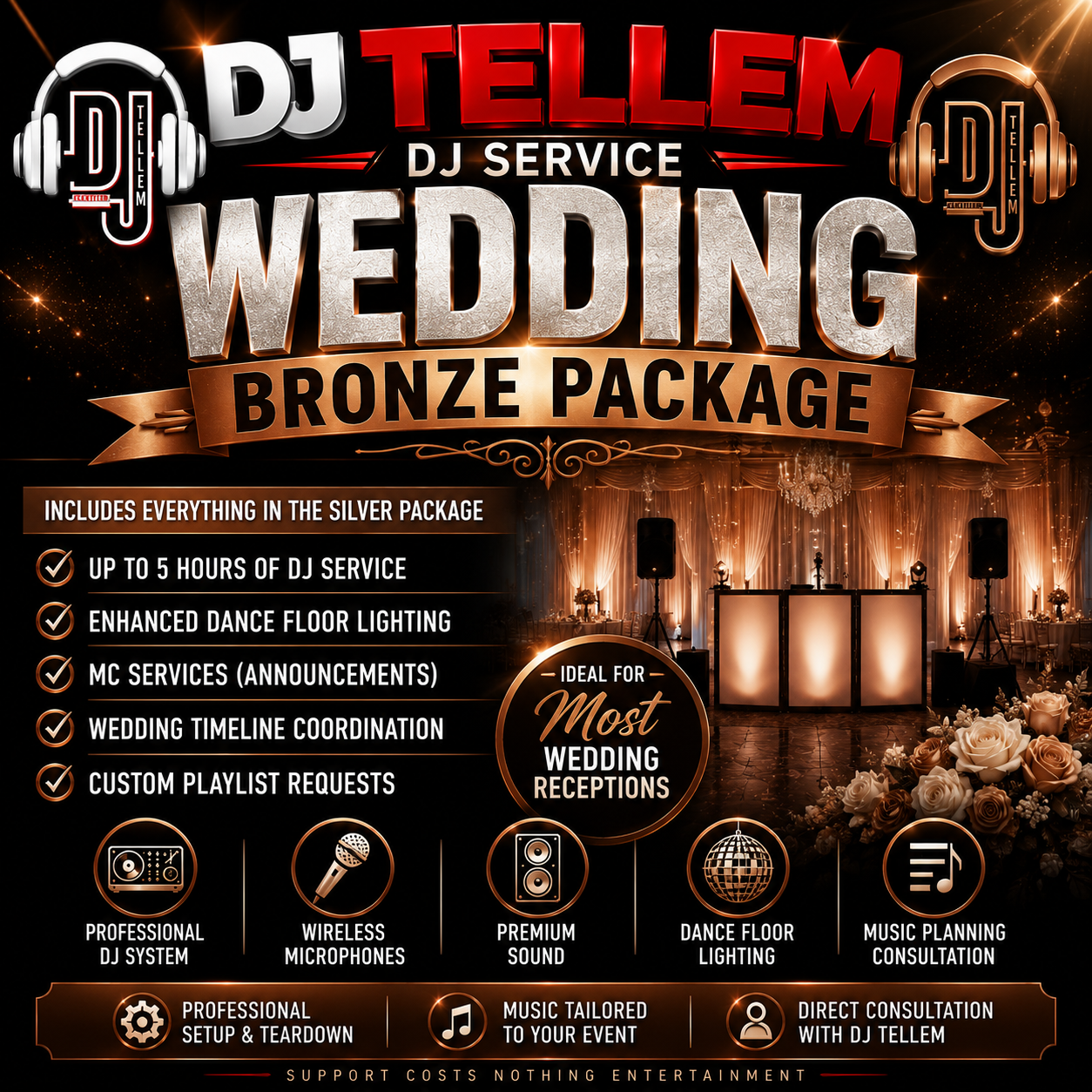
Ideal for most wedding receptions.
✔ Everything in Bronze Package
✔ Up to 5 Hours of DJ Service
✔ Enhanced Dance Floor Lighting
✔ MC Services (Announcements)
✔ Wedding Timeline Coordination
✔ Custom Playlist Requests
Professional Setup & Teardown
Music Tailored To Your Event
Direct Consultation With DJ Tell’em
Travel Outside 50 Miles May Require Additional Fee
Deposit & Contract Required To Secure Booking
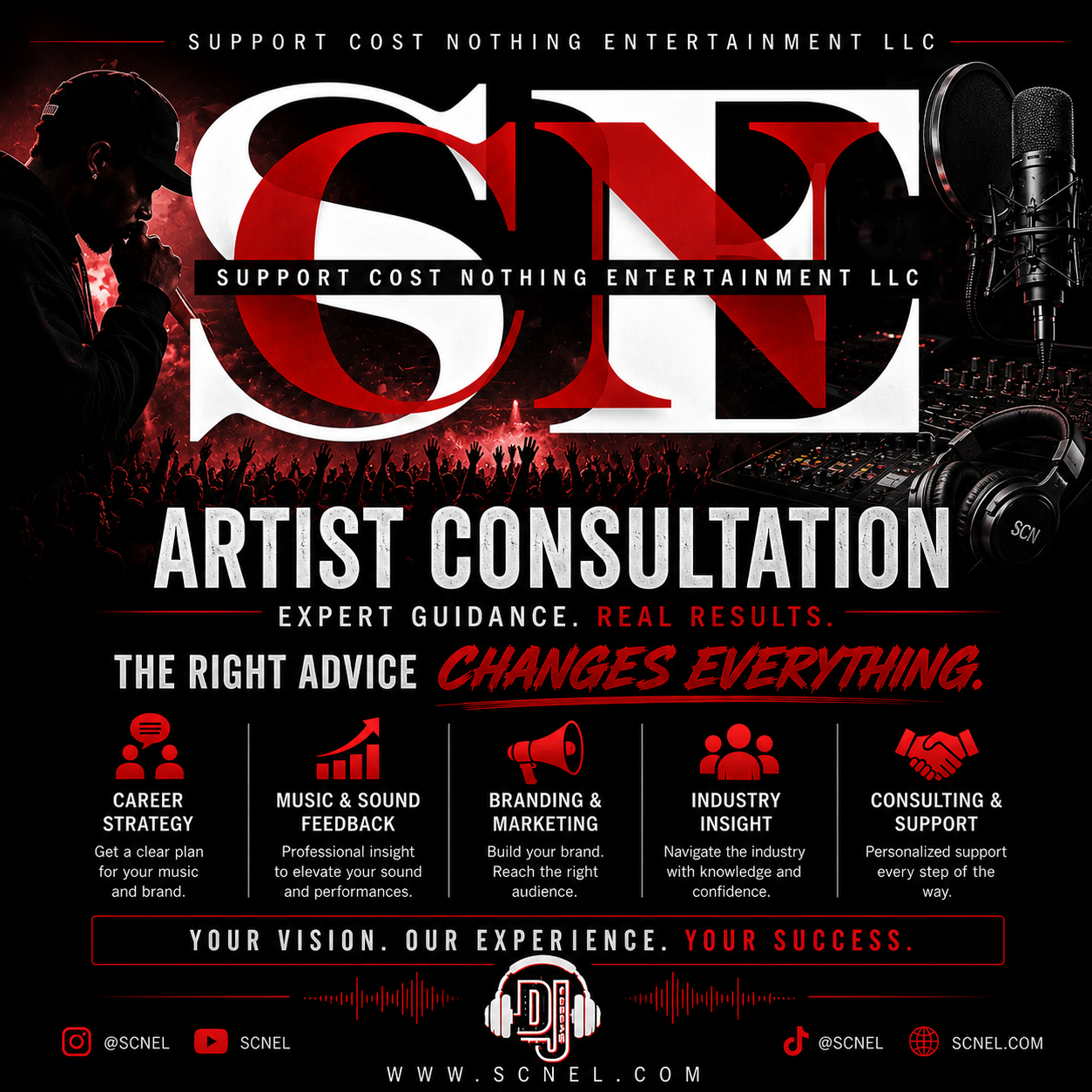
An artist consultation is a professional planning session designed to help artists develop, improve, and grow their music career, brand, and overall image. During an artist consultation, the artist works closely with a creative professional, manager, consultant, or branding team to discuss goals, identify strengths and weaknesses, and create a strategy for success in the music and entertainment industry.
An artist consultation typically consists of career planning, music branding, image development, marketing strategies, social media growth, content ideas, release planning, networking advice, performance preparation, and promotional guidance. It may also include discussions about logos, cover art, photoshoots, music videos, merchandise, streaming platforms, audience engagement, and building a professional presence through tools such as Electronic Press Kits (EPKs).
Additional topics often covered in an artist consultation include:
Music release strategies
Single and album rollout planning
Artist image and style development
Social media branding and content creation
Graphic design and promotional materials
Booking and performance opportunities
Streaming and distribution guidance
Industry networking and collaborations
Fan engagement and audience growth
Budget planning for marketing and promotion
Long-term career goals and branding direction
The purpose of an artist consultation is to provide artists with knowledge, direction, and a customized game plan to help elevate their brand, increase visibility, and move professionally within the entertainment industry.
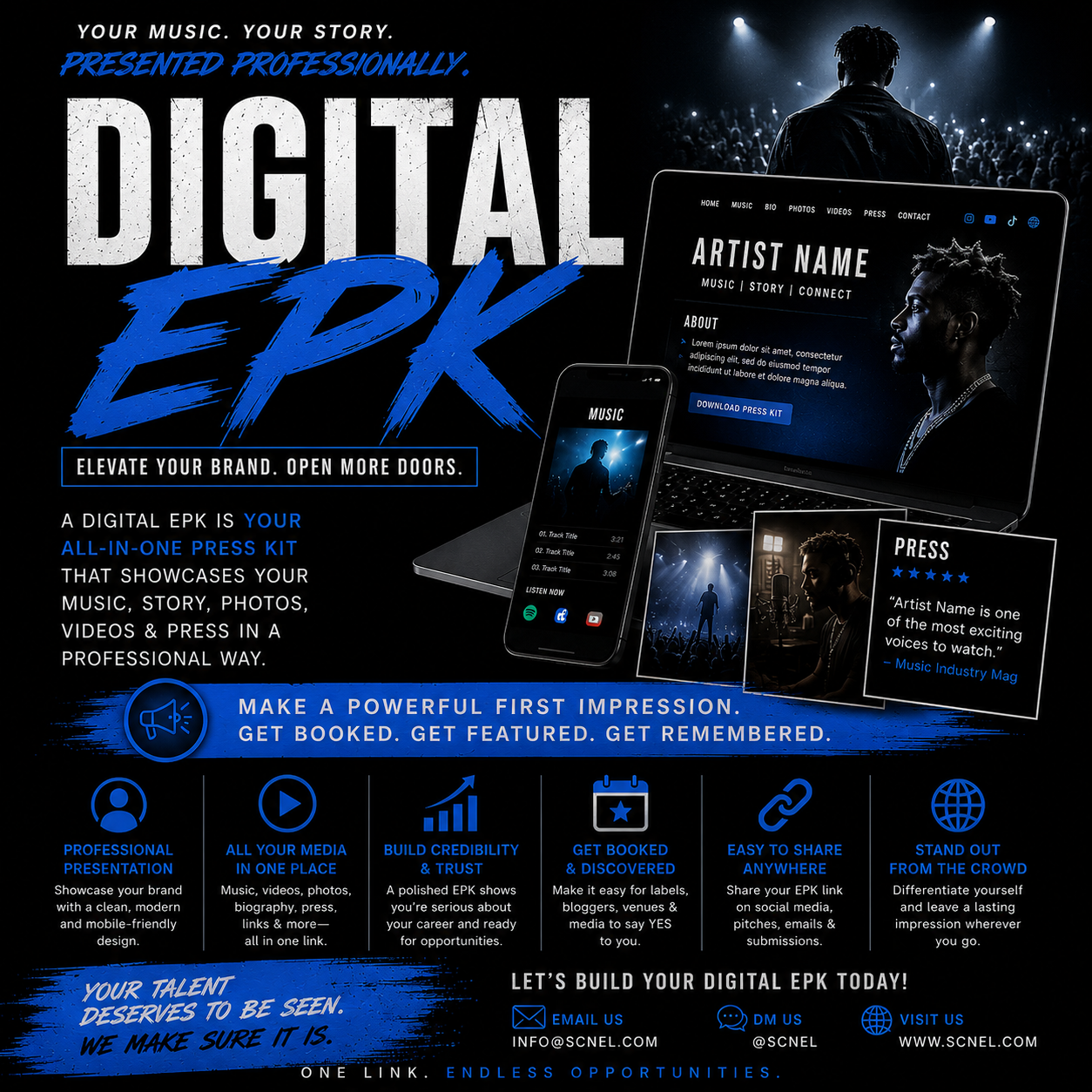
An Electronic Press Kit (EPK) is a professional digital presentation used by artists, musicians, entertainers, and brands to promote themselves and showcase their work. It acts as a modern-day resume and marketing package designed to give promoters, booking agents, media outlets, record labels, venues, and fans quick access to important information about the artist or business. An EPK helps create a strong first impression while building credibility, visibility, and professional branding.
A complete EPK typically consists of an artist biography, high-quality promotional photos, logos and branding elements, music releases, streaming links, music videos, performance clips, social media accounts, press coverage, interviews, achievements, collaborations, upcoming events, booking information, and direct contact details. Many EPKs also include cover art, flyers, merchandise previews, audience statistics, and testimonials to further highlight the artist’s image and success.
The purpose of an EPK is to present all promotional material in one organized and visually appealing format that reflects the artist’s personality, style, and brand. Whether used for booking shows, networking, media exposure, sponsorships, or music promotion, an EPK is an essential tool for establishing a professional presence in the entertainment industry.
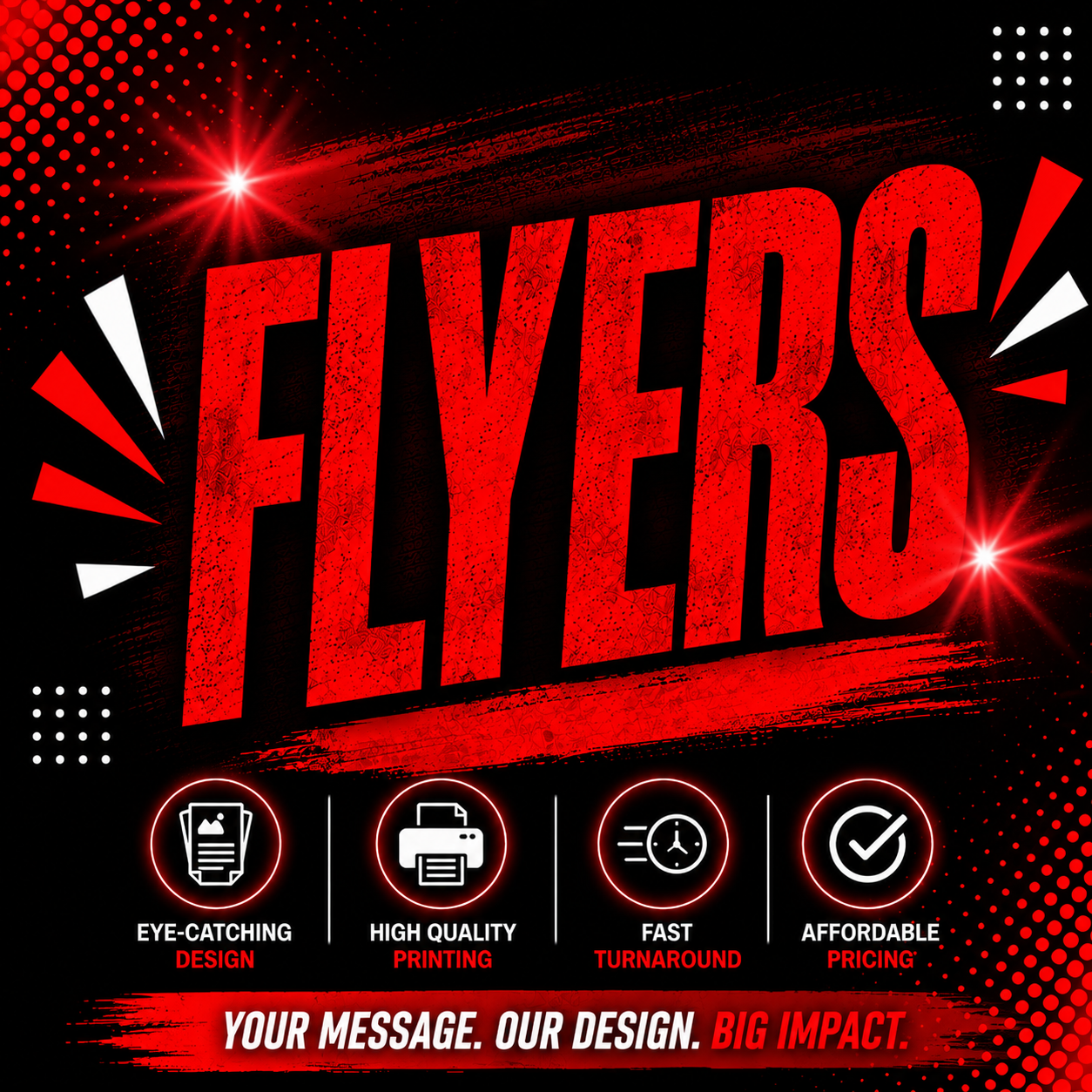
A flyer is a visually designed promotional advertisement used to share information, market a product or service, promote an event, advertise music releases, or build brand awareness. Flyers are commonly used by artists, businesses, clubs, and organizations to attract attention and quickly communicate important details in a bold and creative format. They can be printed physically or shared digitally across social media platforms, websites, and messaging apps.
A professionally designed flyer typically consists of a strong headline or title, eye-catching graphics or photos, logos, colors, creative typography, and important information organized in a clear layout. Depending on the purpose, a flyer may also include artist names, event dates, locations, prices, social media handles, contact information, music release details, QR codes, sponsor logos, or promotional slogans.
Common elements included in a flyer are:
Title or main headline
Artist or business name
Photos or custom graphics
Logos and branding
Background design and color theme
Event or release information
Date and time
Contact details
Social media usernames
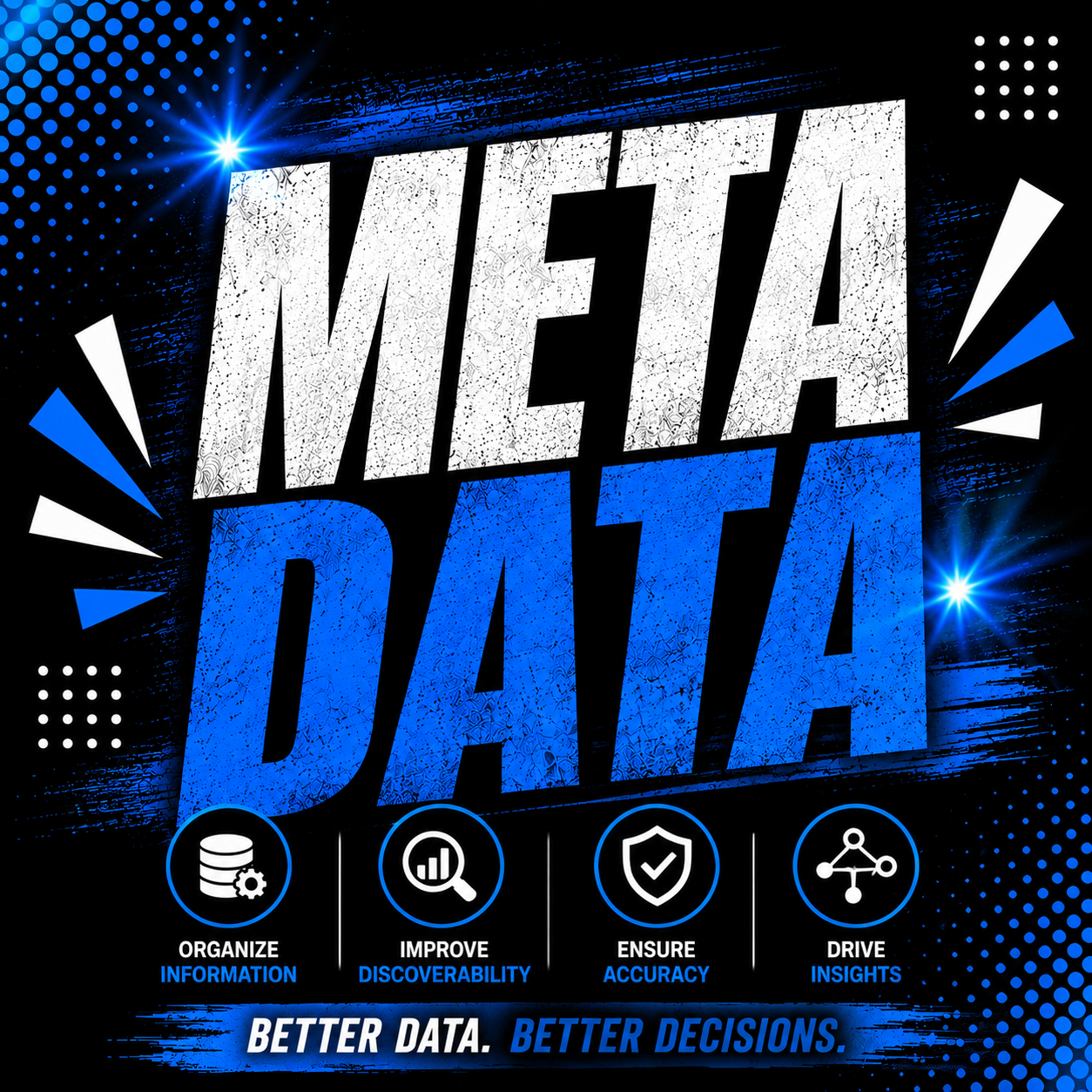
Metadata tagging is the process of adding important digital information to audio files, videos, images, and other media content to help identify, organize, and properly distribute the content across streaming platforms, search engines, and media libraries. In the music industry, metadata tagging is essential because it ensures that artists, producers, songwriters, and contributors receive proper credit while making the content easier to find and manage online.
Metadata tagging typically consists of detailed information attached to a file, including the artist name, song title, album name, genre, release date, producer credits, songwriter information, featured artists, copyright details, publisher information, ISRC codes, UPC codes, cover artwork, and streaming platform data. This information becomes embedded into the media file and is recognized by music platforms, digital stores, and media players.
Common elements included in metadata tagging are:
Artist name
Song title
Album or project title
Featured artists
Producer and songwriter credits
Genre and subgenre
Release date
Copyright and publishing information
Record label information
ISRC and UPC codes
Track number and album order
Cover artwork
Explicit content labeling
Composer and engineer credits
Streaming and distribution data
The purpose of metadata tagging is to improve organization, searchability, ownership tracking, professional presentation, and royalty collection. Proper metadata helps ensure music appears correctly on platforms such as Spotify, Apple Music, YouTube Music, Amazon Music, and Tidal while helping artists receive accurate credit and payment for their work. Metadata tagging is an important part of professional music distribution, branding, and digital music management
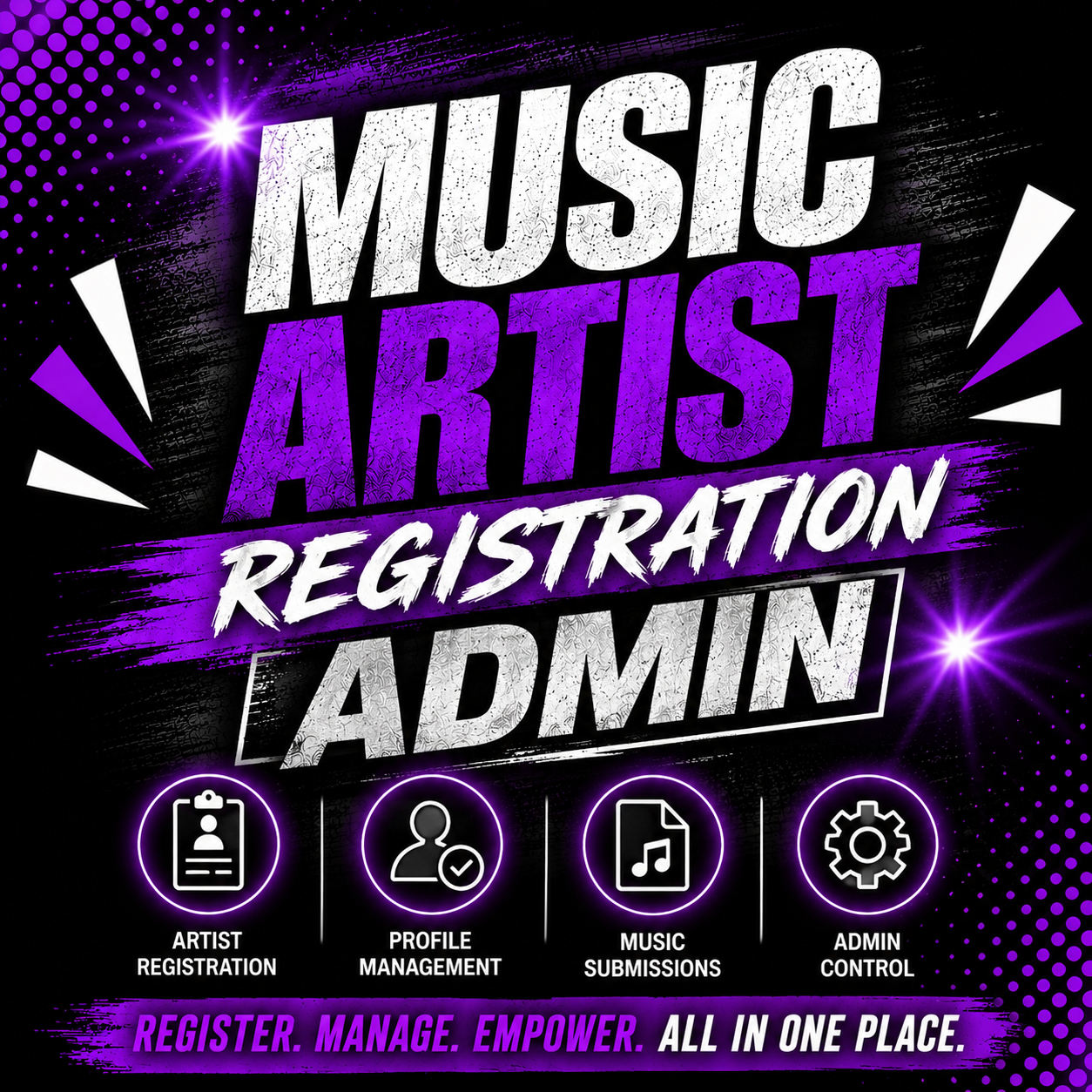
A Music Artist Registration Admin is a professional service that assists artists, musicians, producers, and entertainers with properly registering, organizing, and managing the business and legal side of their music career. This process helps ensure that an artist’s music, brand, royalties, and ownership information are correctly documented and connected across music industry platforms, performance rights organizations, streaming services, and distribution networks.
A Music Artist Registration Admin typically consists of setting up and managing important artist accounts, registrations, and industry documentation needed for professional music releases and royalty collection. The goal is to help artists protect their work, establish ownership, maintain accurate records, and maximize revenue opportunities within the music industry.
Common services included in Music Artist Registration Administration are:
Artist name and brand registration
Music distribution setup
Performance Rights Organization (PRO) registration
Songwriter and publisher registration
Copyright registration assistance
ISRC and UPC code setup
Metadata tagging and organization
Streaming platform account setup
YouTube Official Artist Channel assistance
Spotify for Artists and Apple Music setup
Royalty collection management
Split sheet organization
Publishing administration guidance
Business and label setup assistance
Social media and branding coordination
EPK and promotional material organization
Release management and music catalog tracking
The purpose of a Music Artist Registration Admin is to help artists operate professionally while making sure their music and branding are properly connected, protected, and monetized across the entertainment industry. Proper registration and administration help artists receive accurate credit, collect royalties efficiently, maintain ownership records, and build a stronger foundation for long-term career growth.
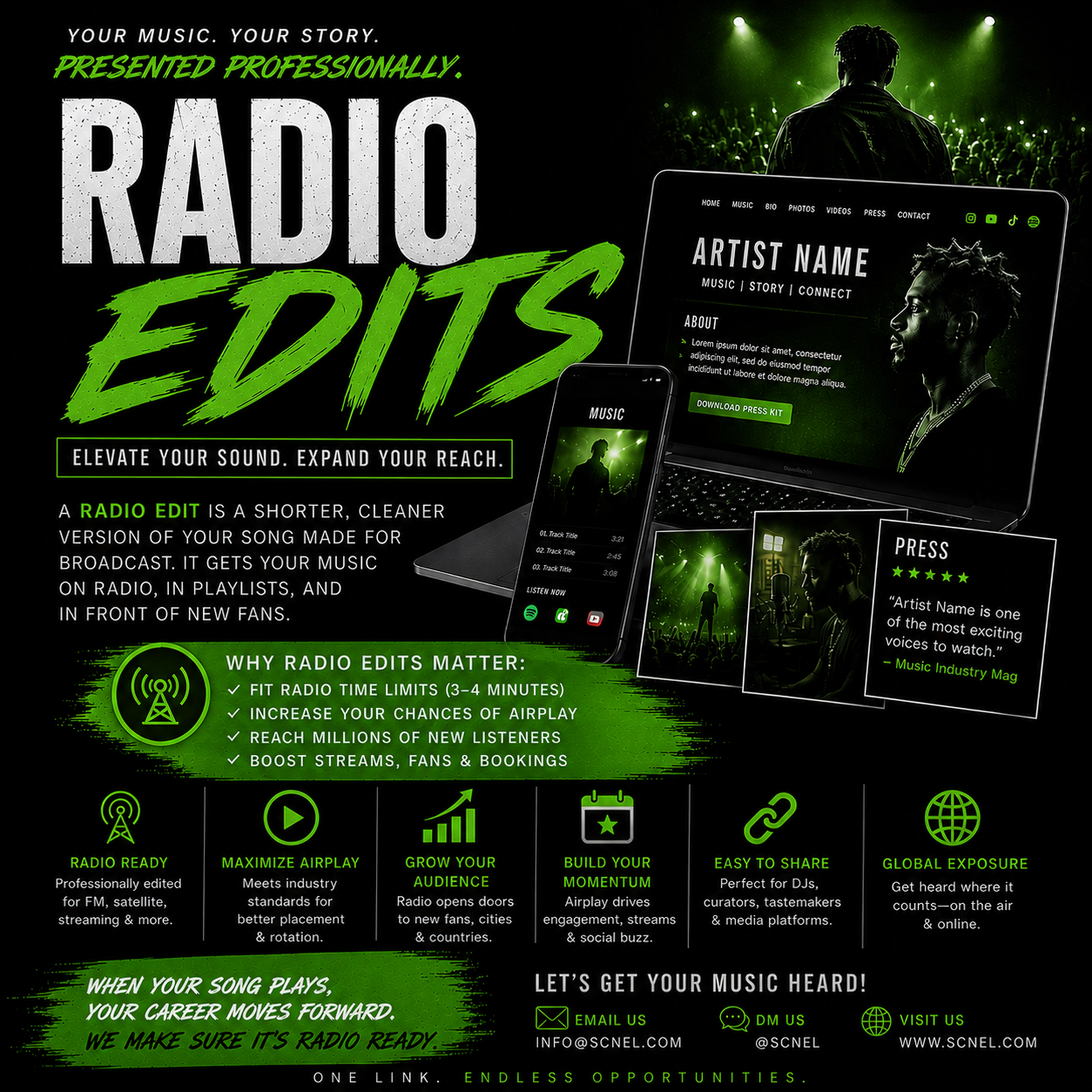
Radio edits are specially modified versions of songs created to meet broadcasting standards for radio stations, television networks, streaming platforms, and public media outlets. These edits are designed to remove or replace explicit language, offensive content, excessive profanity, sexual references, violence, or other material that may violate broadcasting regulations or audience guidelines. Radio edits help make music suitable for mainstream audiences while increasing the chances of receiving radio airplay, public exposure, and commercial opportunities.
A radio edit typically consists of:
Removal or replacement of explicit lyrics
Clean versions of profanity and offensive language
Shortened song length for radio formatting
Adjusted intros and endings for smoother transitions
Volume balancing and mastering adjustments
Instrumental edits or muted sections
Rearranged verses or hooks for timing purposes
Broadcast-ready audio formatting
Proper metadata tagging and labeling
Clean and explicit version organization
Most commercial radio stations prefer songs that are approximately 2 to 4 minutes long, making radio edits important for maintaining listener engagement and fitting programming schedules. In many cases, radio edits are also required for television placements, advertisements, public performances, school events, sports arenas, and streaming playlists with content restrictions.
Radio edits are important because they:
Increase opportunities for radio airplay
Make music accessible to wider audiences
Improve chances for television and commercial placements
Help artists maintain a professional image
Expand promotional and marketing opportunities
Meet FCC and broadcasting guidelines
Allow music to be played in public venues and family-friendly environments
Improve chances of playlist placements and industry exposure
Having both clean and explicit versions of music is considered professional within the music industry because it allows artists to market their music to different audiences and platforms while maximizing exposure and monetization opportunities.
We will pitch your music for you!! this service will help get your music possibly on T.v., film, ads and games and more. This is NOT a 100% guarantee but this helps to get your music floating in the right circles with the right people.
Get the subscription!!! Get 20% off plus get 5 songs in constant rotation
Music Sync Licensing, also known as Synchronization Licensing, is the process of legally licensing music to be used alongside visual media such as movies, television shows, commercials, video games, podcasts, social media content, YouTube videos, and streaming productions. A sync license gives permission for a song or musical composition to be “synchronized” with video or visual content for commercial or promotional use.
Music Sync Licensing allows artists, producers, songwriters, and rights holders to earn revenue by placing their music in entertainment and media projects. It is an important part of the music industry because it creates opportunities for exposure, branding, networking, and long-term royalty income.
Music Sync Licensing typically consists of:
Song and music catalog registration
Ownership verification and copyright documentation
Master recording rights management
Publishing rights administration
Metadata tagging and song organization
Instrumental and clean version preparation
Licensing agreements and contracts
Music pitching to supervisors and agencies
Cue sheet preparation
Performance Rights Organization (PRO) registration
Royalty collection and tracking
Audio formatting and file delivery
Artist and producer credit management
Sync-ready music packaging
Negotiation of licensing fees and usage rights
Common media placements for sync licensing include:
Movies and film soundtracks
Television shows and streaming series
Commercials and advertisements
YouTube and social media content
Podcasts and online broadcasts
Video games and mobile apps
Corporate and promotional videos
Sports programming and highlight reels
Documentaries and independent films
The purpose of Music Sync Licensing is to connect music creators with visual media opportunities while generating income and expanding audience reach. Successful sync licensing can increase artist exposure, strengthen branding, create industry connections, and provide long-term royalty earnings through television broadcasts, streaming services, and commercial usage.
No results match your search. Try removing a few filters.